Summary
In 2026, social media is no longer just a communication tool — it is the infrastructure of modern commerce, culture, and public discourse. Understanding the social media advantages and disadvantages in 2026 is essential for brands, marketers, and individuals who want to use these platforms strategically rather than reactively. With over 5.2 billion active social media users globally, the stakes — and the opportunities —have never been higher.
Why Social Media Matters in 2026
In 2026, social media has evolved far beyond entertainment. Platforms like TikTok, Instagram, LinkedIn, and YouTube Shorts now shape how people learn, shop, communicate, and grow businesses. A single viral video can build a brand, influence public opinion, or create career opportunities overnight.
However, the pros and cons of social media are more significant than ever. While these platforms offer unmatched reach, marketing potential, and global connectivity, they also raise concerns about data privacy, misinformation, mental health, and increasing dependence on algorithms. Businesses face shrinking organic reach, tougher competition, and stricter regulations, making strategic planning essential.
In this article, we break down the full picture: the genuine advantages that make social media indispensable for growth, the real disadvantages that demand active management, and the strategic framework that separates brands that thrive from those that stall. Let’s begin.
What Is Social Media?
Social media refers to digital platforms and applications that enable users to create, share, and interact with content — and with each other — in real time. From text posts and photos to videos, live streams, and AI-generated content, social media has evolved far beyond its early roots as a simple communication tool. Today, platforms like Instagram, TikTok, Facebook, LinkedIn, X (formerly Twitter), YouTube, and Pinterest are woven into the fabric of modern life — shaping how we communicate, shop, learn, work, and form opinions.

The Scale of Social Media in 2025
The numbers are staggering. According to Datareportal’s 2025 Global Digital Report, 5.17 billion people — approximately 63.9% of the world’s population — actively use social media. That figure has grown by 282 million users in just one year. The average user now maintains accounts on 6.8 different platforms, spending roughly 2 hours and 23 minutes online each day. Across a lifetime, that adds up to over 5 years spent on social media

PLATFORM POPULARITY (2025)
Most-used platforms globally:
1) YouTube — 2.5B users
2) Facebook — 3.05B users
3) Instagram — 2B users
4) TikTok — 1.67B users
5) LinkedIn — 1B users
6) X (Twitter) — 611M users
7) Pinterest — 498M users.
Source: Datareportal Global Digital Report 2025.
Understanding both the advantages and disadvantages of social media is essential — not just for individuals managing their personal wellbeing, but for parents, educators, mental health professionals, and businesses seeking to harness its power responsibly.
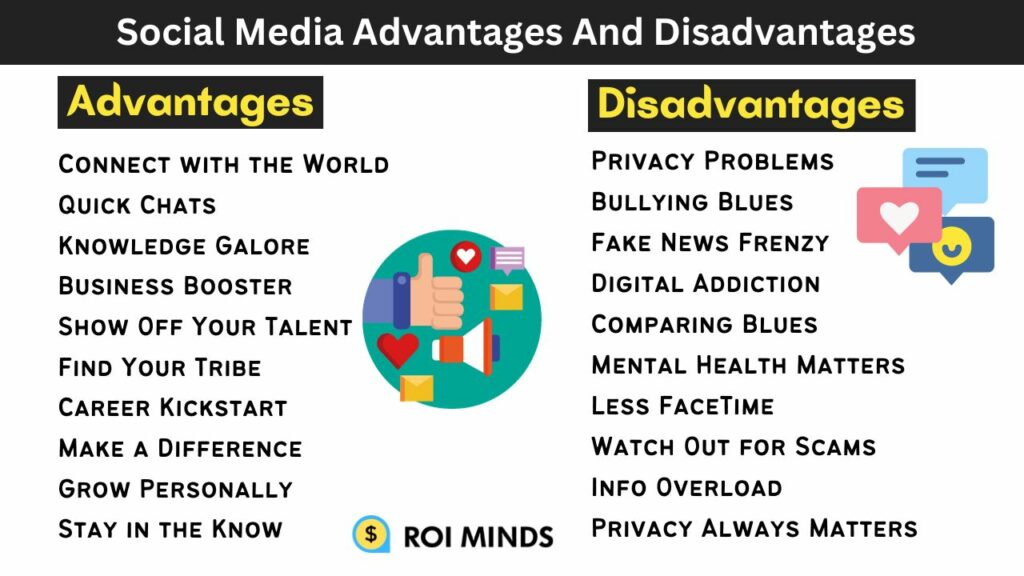
Advantages vs. Disadvantages — Quick Overview
| Advantage | Corresponding Disadvantage / Risk |
| Global reach at near-zero cost | Algorithm changes can collapse reach overnight |
| Hyper-precise paid targeting | Rising CPC/CPA; post-iOS signal loss |
| Direct community building | Cyberbullying & harassment exposure |
| Social commerce (TikTok Shop, Instagram) | Platform dependency risk for revenue |
| Real-time market intelligence | Misinformation spreads faster than facts |
| Authority and E-E-A-T building | Data privacy risks and regulatory fines |
| Brand awareness at scale | Mental health impact on audience & team |
| Customer service channel | Negative reviews go viral instantly |
| Competitor research and trend spotting | Time and resource intensity |
| Low barrier to entry for new brands | Saturated market — content quality threshold rising |
Top 15 Advantages of Social Media
Social media offers genuine, measurable benefits across personal, professional, and societal dimensions. Here are 15 key advantages, backed by data and real-world evidence.
Global Connectivity
Social media has effectively eliminated geographic barriers to communication. Families separated by continents stay connected daily via Facebook and WhatsApp. Friendships forged online transcend borders. According to Pew Research Center, 72% of adults say social media has helped them maintain relationships with family and friends they would otherwise lose touch with.
Instant Access to Information
Breaking news, scientific discoveries, government announcements — social media delivers information faster than any traditional media channel. During the COVID-19 pandemic, platforms like Twitter became the primary real-time source for health updates and policy changes. 55% of U.S. adults now regularly get news from social media (Pew Research, 2024).
Business Growth and Marketing
For businesses of all sizes, social media has democratized marketing. A small ecommerce brand can now reach 50,000 targeted customers with a $100 ad budget. Globally, social media advertising revenue reached $226 billion in 2024 (Statista), reflecting its unmatched ROI potential. Organic reach, influencer partnerships, and community-building are equally powerful tools.
Professional Networking and Career Growth
LinkedIn has transformed how professionals build careers. Over 95 million job applications are submitted through LinkedIn monthly. Beyond LinkedIn, Twitter/X serves as a professional discourse platform for journalists, researchers, and entrepreneurs. Social media has made professional networking accessible to anyone with an internet connection — not just those with elite institutional access.
Community Building and Support Networks
Social media has been a lifeline for people with rare conditions, niche interests, or marginalized identities. Online support communities for rare diseases, chronic illness, mental health, LGBTQ+ identities, and grief have provided connection and validation where none existed locally. Research published in the Journal of Medical Internet Research found that peer support via social media significantly reduced feelings of isolation among chronic illness patients.
Education and E-Learning
YouTube has become one of the world’s largest informal education platforms, with tutorials ranging from quantum physics to woodworking. Educational TikTok (‘EduTok’) creators reach millions of students. Facebook Groups facilitate peer learning. Social media has made lifelong learning accessible, free, and engaging in ways traditional institutions cannot match.
Civic Engagement and Social Movements
Social media has democratized political participation and social activism. The #MeToo movement, Black Lives Matter, climate activism (Greta Thunberg’s global reach), and countless local civic campaigns have been organized and amplified through social platforms. In many countries, social media has become the primary tool for grassroots political organizing.
Social Commerce and Shopping
Instagram Shopping, TikTok Shop, Pinterest Buyable Pins, and Facebook Marketplace have merged social media with ecommerce. Global social commerce sales reached $1.3 trillion in 2024 and are projected to grow to $2.9 trillion by 2026 (Statista). Consumers now discover, research, and purchase products without leaving their social feed.
Emergency Communication and Crisis Response
During natural disasters, political crises, and public health emergencies, social media serves as a critical emergency communication channel. The American Red Cross reports that 74% of people expect emergency response organizations to be active on social media during a disaster. Real-time crowdsourcing of disaster information has saved lives.
Mental Health Support Communities
While social media has well-documented mental health risks (covered in the next section), it also provides genuine mental health benefits. Online communities for depression, anxiety, eating disorders, and addiction offer peer support, reduce stigma, and often serve as the first step toward professional help. For people in areas without access to mental health services, social media support groups can be invaluable.
Entertainment and Creative Expression
Social media has created an entirely new entertainment economy. Creators on YouTube, Instagram, and TikTok entertain billions of people daily. The global creator economy was valued at $250 billion in 2024 (Goldman Sachs). Short-form video, live streaming, and podcasting have given artists, comedians, educators, and storytellers direct access to global audiences — no gatekeepers required.
Customer Service and Brand Loyalty
73% of consumers say they’ve used social media to reach out to a brand for customer service (Sprout Social, 2024). Brands that respond quickly on social media report 25% higher customer retention rates. Real-time public engagement builds trust in ways traditional customer service channels cannot.
Research and Academic Collaboration
Social media has transformed academic research. ResearchGate connects 25 million researchers globally. Twitter/X hosts real-time academic debates. Social listening tools allow researchers to study public opinion, behavior, and sentiment at scale. The COVID-19 pandemic saw unprecedented scientific collaboration facilitated through social media channels.
Language Learning and Cultural Exchange
Platforms like TikTok, Instagram, and YouTube have become powerful tools for language learning, with creators teaching languages to millions of followers. Cross-cultural exchange — exposure to music, food, art, traditions, and perspectives from around the world — fosters global empathy and understanding.
Job Creation and the Creator Economy
Social media has spawned entirely new professions: content creator, social media manager, influencer, community manager, social commerce specialist. The creator economy employs an estimated 50 million people globally (SignalFire, 2024). For young people in developing economies, social media has opened pathways to income generation that bypass traditional employment barriers.
12 Major Disadvantages of Social Media
The same platforms that connect billions also carry serious, documented risks. Acknowledging these disadvantages honestly — and understanding their mechanisms — is the first step toward managing them effectively.
Mental Health Impact — Anxiety, Depression, and Low Self-Esteem
The link between heavy social media use and mental health deterioration is one of the most studied areas in digital wellness research. A 2023 meta-analysis in JAMA Psychiatry (covering 226 studies and 275,000+ participants) found that heavy social media use was significantly associated with depression, anxiety, and loneliness — particularly among adolescents aged 13–19. The mechanism: endless scroll designs, social comparison triggers, and algorithmically curated highlight reels create distorted perceptions of reality and social norms.
Addiction and Dopamine Dependency
Social media platforms are engineered for engagement. Variable reward systems — the unpredictability of likes, comments, and shares — trigger dopamine releases in the brain similar to slot machines. Sean Parker, founding president of Facebook, publicly stated: ‘We understood this consciously. And we did it anyway.’ Studies estimate 210 million people worldwide suffer from internet and social media addiction (AICH, 2023). Signs include compulsive checking, anxiety when offline, and prioritizing social media over real-life obligations.
Cyberbullying and Online Harassment
According to StopBullying.gov, 59% of U.S. teenagers have experienced some form of online harassment. Among LGBTQ+ students, that figure rises to 90%. Unlike traditional bullying, cyberbullying is relentless — it follows victims into their homes and can escalate to mass public humiliation within hours. Anonymity emboldens perpetrators, while platforms have been slow to develop effective moderation systems. Every 7 minutes, a child is bullied online.
Misinformation and Fake News Epidemic
A landmark MIT study found that false information spreads six times faster on Twitter/X than accurate information — and reaches far more people. The consequences are severe: vaccine hesitancy fueled by anti-science misinformation, election integrity undermined by disinformation campaigns, public health crises worsened by medical myths. The COVID-19 ‘infodemic’ — the WHO’s term for the parallel crisis of misinformation — directly cost lives. Social media algorithms prioritize engagement over accuracy, and outrage reliably drives more engagement than nuance.
Privacy Violations and Data Exploitation
Social media platforms collect an extraordinary volume of personal data: location history, purchasing behavior, political leanings, relationship status, health concerns. This data is monetized through advertising and, in some cases, sold to third parties. The Cambridge Analytica scandal — in which 87 million Facebook users’ data was harvested without consent for political targeting — exposed the scale of potential misuse. In 2024, Meta paid a $725 million settlement over this case. Users rarely read privacy policies, and even those who do have limited real control over their data.
FOMO (Fear of Missing Out) and Social Comparison
Curated social media feeds present an algorithmically selected highlight reel of others’ lives — vacations, promotions, relationships, achievements. This creates persistent social comparison pressure. Research from the University of Pennsylvania found that reducing social media use to 30 minutes per day led to significant reductions in loneliness and depression among college students. FOMO also drives compulsive checking behavior, reducing presence, focus, and quality of real-world experiences.
Workplace Productivity Loss
The average employee checks social media 8 times during the workday, costing businesses an estimated $650 billion annually in lost productivity (Salary.com, 2024). Beyond productivity, social media creates reputational risks for employees — a poorly worded post can end careers — and for employers managing teams active on public platforms
Physical Health Consequences
Excessive screen time associated with social media has measurable physical health effects. ‘Text neck,’ eye strain, carpal tunnel syndrome, and disrupted sleep (blue light suppresses melatonin production) are well-documented. The Sleep Foundation reports that 1 in 3 adults who use devices in bed report poor sleep quality. Among teenagers, the average bedtime has shifted 47 minutes later since smartphones became ubiquitous.
Spread of Extremism and Radicalization
Algorithmic recommendation systems — designed to maximize engagement — have been shown to funnel vulnerable users toward increasingly extreme content. The U.S. Senate Intelligence Committee found that Russian state actors used social media to amplify societal divisions during the 2016 and 2020 U.S. elections, reaching 126 million Facebook users. Radicalization research consistently shows that social media platforms served as primary recruitment tools for extremist movements globally.
Negative Impact on Relationships
Paradoxically, social media can damage the real-world relationships it claims to enhance. Phubbing (ignoring people in favor of phones), social media jealousy, and the performance of relationships for public validation all erode authentic connection. A study in the journal Computers in Human Behavior found that couples where one partner used Facebook heavily reported 32% higher rates of relationship dissatisfaction.
AI Deepfakes and Trust Erosion (Emerging 2025 Risk)
The rise of AI-generated content — deepfake videos, synthetic voice cloning, AI-written fake news articles — has introduced a new category of social media risk: the erosion of epistemic trust. When any video can be fabricated convincingly, distinguishing real from fake becomes increasingly difficult. In 2024, AI-generated deepfakes impersonating celebrities were used to defraud over $25 billion globally (Deloitte, 2024). This new threat has no equivalent in previous social media eras
Environmental Impact
Often overlooked: social media’s significant carbon footprint. Global data centers powering social platforms consume approximately 200 TWh of electricity annually — comparable to the energy consumption of entire countries. Streaming high-definition video content, the dominant format on social media, accounts for 1% of global carbon emissions (IEA, 2024). As social commerce and video streaming grow, this environmental cost will increase substantially.
Platform-Specific Advantages and Disadvantages
Not all social media platforms are created equal. Each has a distinct user base, content format, algorithmic behavior, and risk profile. Here is a comparative breakdown of the five most influential platforms in 2025.
| Platform | Best For | Advantages/Disadvantages |
| Instagram (Meta) 2B users | Visual brands, lifestyle, fashion, food, travel, influencer marketing | Advantage: Highly visual storytelling; strong Reels reach; Instagram Shopping; influencer ecosystem; strong brand-building for B2C; Collab posts for co-marketing Disadvantages: Unrealistic beauty standards; high anxiety/depression correlation in teens; algorithm rewards aesthetics over substance; declining organic reach for pages; increasing ad saturation |
| Facebook (Meta) 3.05B users | Community building, local business, B2C advertising, events, older demographics | Advantage: World’s largest social platform; powerful Groups for community; advanced ad targeting (Facebook Ads); Marketplace for local commerce; Events feature; strong for older demographics 35+ Disadvantage: Declining teen usage; aging user base; persistent misinformation problem; controversial political content; complex privacy settings; declining organic page reach (down 85% since 2016) |
| LinkedIn (Microsoft) 1B users | Professional networking, B2B marketing, recruitment, thought leadership | Advantage: Only professional platform with trust signals; 95M job applications/month; strong B2B lead generation; thought leadership content; Alumni networks; Company pages with analytics Disadvantage: Can feel performative (‘humblebragging’); growing spam/cold outreach problem; content quality inconsistency; premium features are expensive; less effective for B2C |
| TikTok (ByteDance) 1.67B users | Entertainment, viral marketing, Gen Z reach, product discovery, education | Advantage: Extraordinary organic reach potential (algorithm-first, not follower-first); fastest-growing platform; ‘For You Page’ allows new creators to go viral; emerging search engine behavior among Gen Z; TikTok Shop growing rapidly Disadvantage: Geopolitical ban risks (US TikTok ban concerns); extreme short attention spans rewarded; heavy teen usage with addiction risk; privacy concerns (Chinese data handling); misinformation spreads rapidly; creator burnout |
| X / Twitter (X Corp) 611M users | News, real-time events, public discourse, politics, professional commentary | Advantage: Unparalleled for real-time news and breaking events; direct access to journalists, politicians, executives; strong for PR and crisis communication; Spaces audio discussions; community hashtags Disadvantage: Platform instability post-acquisition (2022–present); surging hate speech and harassment; advertiser exodus; paid verification confusing trust signals; declining user engagement among younger demographics; echo chambers |
FROM OUR EXPERIENCE AT ROI MINDS
Across 150+ client campaigns, we’ve found that platform choice should be determined by audience and objective — not trends. B2B clients generate 3-4x more qualified leads on LinkedIn than any other platform. Ecommerce brands under $1M revenue consistently see the best ROAS on Meta (Facebook/Instagram). TikTok delivers extraordinary reach for brand awareness but lower conversion rates unless paired with a TikTok Shop strategy. One platform done well always outperforms five platforms done mediocrely.
Social Media for Businesses — An Agency Perspective
EXPERIENCE NOTE
This section draws directly on ROI Minds’ experience managing social media campaigns for 150+ businesses across ecommerce, B2B, healthcare, fashion, and retail sectors. The insights below reflect patterns observed across real campaigns, not theoretical recommendations.
The Business Case for Social Media
Social media has fundamentally shifted from a ‘nice to have’ communication channel to a core business infrastructure. For SMBs and enterprise brands alike, social media now influences product discovery, purchase decisions, customer service, reputation management, talent acquisition, and investor relations. However, the strategic approach differs dramatically based on business type, target audience, and objectives.
Brand Awareness at Scale
An organic Instagram Reel or viral TikTok video can reach millions of potential customers with zero ad spend. For new brands with limited marketing budgets, social media offers a path to brand awareness that traditional media channels (TV, print, radio) cannot provide. 54% of social media users use platforms to research products before purchasing (GlobalWebIndex, 2024).
Targeted Advertising with Measurable ROI
Facebook and Instagram Ads offer targeting precision unmatched in the history of advertising: age, location, interests, behaviors, life events, lookalike audiences, retargeting past visitors. For our ecommerce clients, we routinely achieve ROAS (Return on Ad Spend) of 4:1 to 12:1 on well-optimized Meta campaigns. Every rupee or dollar spent is trackable to sales outcomes in ways billboard advertising never allowed.
Customer Service and Reputation Management
73% of consumers expect brands to respond within 24 hours on social media. Brands that do respond publicly to complaints actually see a 25% increase in customer spending compared to those that don’t (Harvard Business Review). Conversely, a complaint left unanswered publicly can amplify rapidly. Social media has made customer service a public performance — and that creates both risk and opportunity.
Social Commerce: The Fastest-Growing Revenue Channel
Instagram Shopping, TikTok Shop, and Pinterest Shopping have collapsed the funnel from product discovery to purchase into a single platform experience. For our ecommerce clients, social commerce (in-platform purchases) now accounts for 18–32% of total online revenue. The trend is accelerating: social commerce is projected to represent 17% of all global ecommerce by 2025 (Statista).
B2B Lead Generation via LinkedIn
LinkedIn’s targeting precision for B2B marketing is unparalleled. LinkedIn Ads allow targeting by job title, company size, industry, seniority, and specific company names — a capability no other platform offers. Our B2B clients generating leads via LinkedIn consistently report 30–50% lower cost-per-qualified-lead compared to Google Ads for high-intent, niche B2B searches.
Business Risks to Manage
• Platform dependency risk — algorithm changes can halve organic reach overnight (Facebook pages lost 80%+ reach in 2016–2018)
• Reputational crises — a viral negative post can damage years of brand equity within 24 hours
• Employee social media policies — unclear boundaries lead to reputational and legal exposure
• Ad account bans — Meta and TikTok suspend accounts with limited explanation; diversification is essential
• Data privacy compliance — GDPR, CCPA, and India’s DPDP Act create legal exposure for social media data collection
7 Strategic Key Takeaways for 2026
Don’t Rent Your Audience – Own It.
Every brand active on social media should be simultaneously building an email list, SMS subscriber base, or community platform they control. Social media is for discovery; owned channels are for retention. Algorithm changes can’t reach your email list
First-Party Data is Your Most Valuable 2026 Asset.
With third-party cookies gone and iOS privacy restrictions tightened, the brands winning in paid social are those with rich first-party data: email lists, purchase histories, quiz completions, and loyalty programme memberships. Build your data infrastructure now.
Authenticity Outperforms Production Quality
In 2026, AI-generated content has flooded every platform. The scarcest resource is genuine human experience, opinion, and personality. Brands that feature real founders, real customers, and real stories outperform polished but impersonal content — consistently.
Diversify Across Platforms Before You Need To.
No brand should have more than 60% of its social traffic concentrated on a single platform. Build presence on at least two or three platforms in 2026 — TikTok + Instagram + YouTube is the highest-reach combination for most consumer brands.
Measure What Matters: Revenue, Not Vanity Metrics
Follower count is a lagging indicator. The metrics that matter in 2026 are: attributed revenue from social, email subscribers acquired, customer lifetime value of social-acquired customers, and share of voice in your niche. Build your reporting around these.
Privacy Compliance is a Competitive Advantage
Brands that invest in transparent data practices, clear consent mechanisms, and GDPR/DPDP compliance will build stronger customer trust than competitors who cut corners. In 2026, privacy is not just a legal requirement — it is a brand differentiator.
The Future Belongs to AI-Augmented, Human-Led Social Strategy
AI tools accelerate content creation, scheduling, analytics, and A/B testing. But strategy, community management, and brand voice require human judgment. The winning formula in 2026 is AI for efficiency + humans for creativity and relationships.
Conclusion
Social media in 2026 is no longer just a platform—it’s an AI-driven ecosystem shaping how people connect, consume, and make decisions. Its advantages—global reach, real-time engagement, and scalable business growth—are more powerful than ever. But these come with equally critical challenges, including privacy risks, misinformation, algorithm dependency, and growing concerns around AI-generated content.
The real shift in 2026 is clear: success on social media depends on how strategically you use AI, data, and personalization—not just how often you post. Businesses, creators, and users who focus on ethical usage, audience understanding, and smart automation will stay ahead. Those who ignore these changes risk losing visibility and trust.
Ultimately, social media is a tool—and its impact depends on how you use it. In 2026, the winners will be those who balance opportunity with responsibility, leveraging technology to create value without compromising authenticity or trust.
ROI MINDS — SOCIAL MEDIA MARKETING EXPERTISE
If you are a business looking to harness the advantages of social media while managing its risks, ROI Minds offers end-to-end social media marketing services: strategy, content creation, paid advertising (Meta, TikTok, LinkedIn), influencer partnerships, social commerce setup, and performance analytics. With 150+ clients served and $2M+ in managed ad spend, we bring real experience to every campaign.
Visit roiminds.com or contact us via WhatsApp to discuss your social media objectives.
FAQs
How is AI changing social media marketing in 2026?
AI is transforming social media marketing by automating content creation, enabling hyper-personalized ad targeting, powering conversational commerce through chatbots, enhancing social listening with real-time sentiment analysis, and predicting campaign performance before budgets are committed. Brands using AI-driven marketing tools are achieving significantly higher ROI with lower manual effort compared to traditional approaches.
Is social media good or bad overall?
Neither — and that framing misses the point. Social media is a tool, and like all powerful tools, its impact depends entirely on how it is used. The same platform that helped a teenager find a community when they felt completely alone at school is the same platform that drove another teenager toward an eating disorder through incessant exposure to unrealistic body imagery. Context, usage patterns, individual vulnerability, and platform design all determine whether social media is net positive or negative for any given person. The goal is not to avoid social media but to use it intentionally.
Which social media platform is best for business?
It depends on your business type and target audience. For ecommerce and B2C brands targeting consumers 18–45: Meta (Facebook/Instagram) offers the most mature advertising infrastructure with proven ROI. For B2B and professional services: LinkedIn is unrivalled for qualified lead generation. For brand awareness and Gen Z reach: TikTok offers extraordinary organic reach potential at low cost. For local businesses: Facebook and Google Business Profile (not strictly social media, but adjacent). Our recommendation: master one platform before expanding.
Can social media cause depression and anxiety?
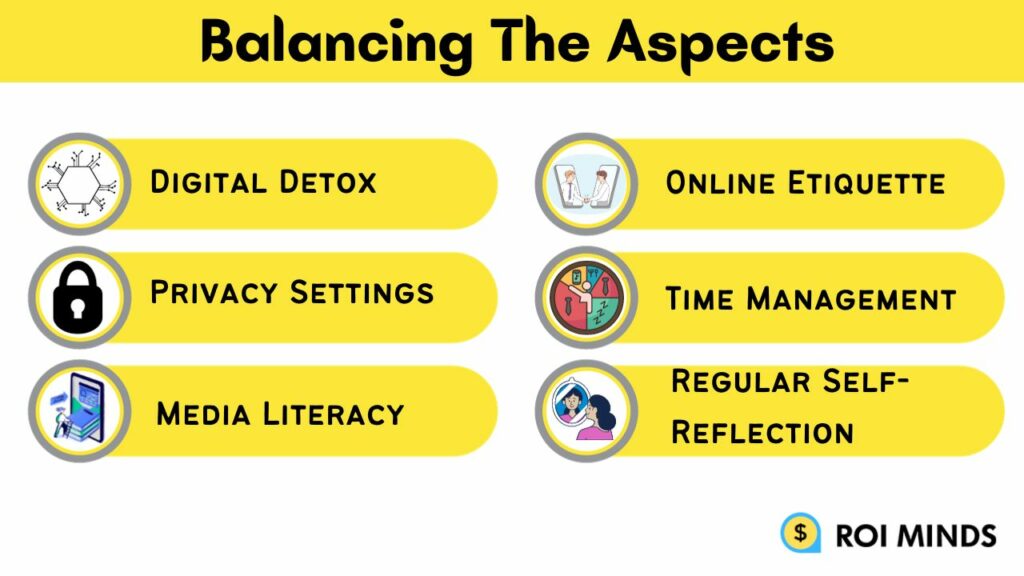
The correlation between heavy social media use and depression/anxiety is consistent across dozens of large studies. Whether the relationship is causal — does social media cause depression, or do depressed people turn to social media more? — remains an active research question. The current scientific consensus (APA, 2023) is that there is likely a bidirectional relationship: heavy use worsens existing vulnerabilities, and vulnerable individuals are drawn to heavier use. Regardless of causation direction, evidence-based interventions (limiting use, curating feeds, taking breaks) consistently improve outcomes.
Positive and Negative Impact of Social Media on Business (2026)
Social media helps businesses grow by increasing brand awareness, reaching targeted audiences, and enabling direct customer engagement at a low cost. It also supports lead generation, sales, and real-time feedback.
However, it also has downsides. Algorithm changes can reduce visibility, negative reviews can harm reputation quickly, and growing dependence on paid ads increases costs. Privacy concerns and content pressure are additional challenges.
Can We Earn Money from Social Media in India?
Yes, earning money from social media in India is possible in 2026 through content creation, affiliate marketing, brand deals, and selling products or services. Success depends on niche focus, consistency, and strategic use of platforms and AI tools.